1
Start with Your Image or a Text Prompt
Upload a photo you already have, a screenshot, a selfie, a product shot, or type a description of what you want and let AI generate it from scratch. Both paths take under a minute.
Reviewed by Thumbnail Studioo · Updated 5 May 2026
Make YouTube Thumbnails FreeAI thumbnail generator
Describe the thumbnail you want and generate it directly on this page.
Your thumbnail will appear here
Write a description and choose a style to get started.
How It Works
Upload a photo you already have, a screenshot, a selfie, a product shot, or type a description of what you want and let AI generate it from scratch. Both paths take under a minute.
Type your video title using thick, heavy fonts at large sizes. Zoom out to check readability at roughly the size YouTube shows it in the mobile feed, so you can catch problems before you upload.
Remove distracting backgrounds, boost contrast, and pick colors that stand out in the YouTube feed. Bright reds, yellows, and electric blues compete well against YouTube's white and dark grey interface.
YouTube overlays the video duration in the bottom-right corner. Make sure your face and text stay in the center two-thirds of the frame so nothing important gets covered.
Download a JPG or PNG in a 16:9 preset. Choose 1280x720 HD for a smaller file or 3840x2160 to match YouTube's current recommended resolution.
Go to YouTube Studio, open your video, click the thumbnail section, and upload your file. Changes go live within a few minutes. You can swap it out any time if you want to test a different version.
Examples
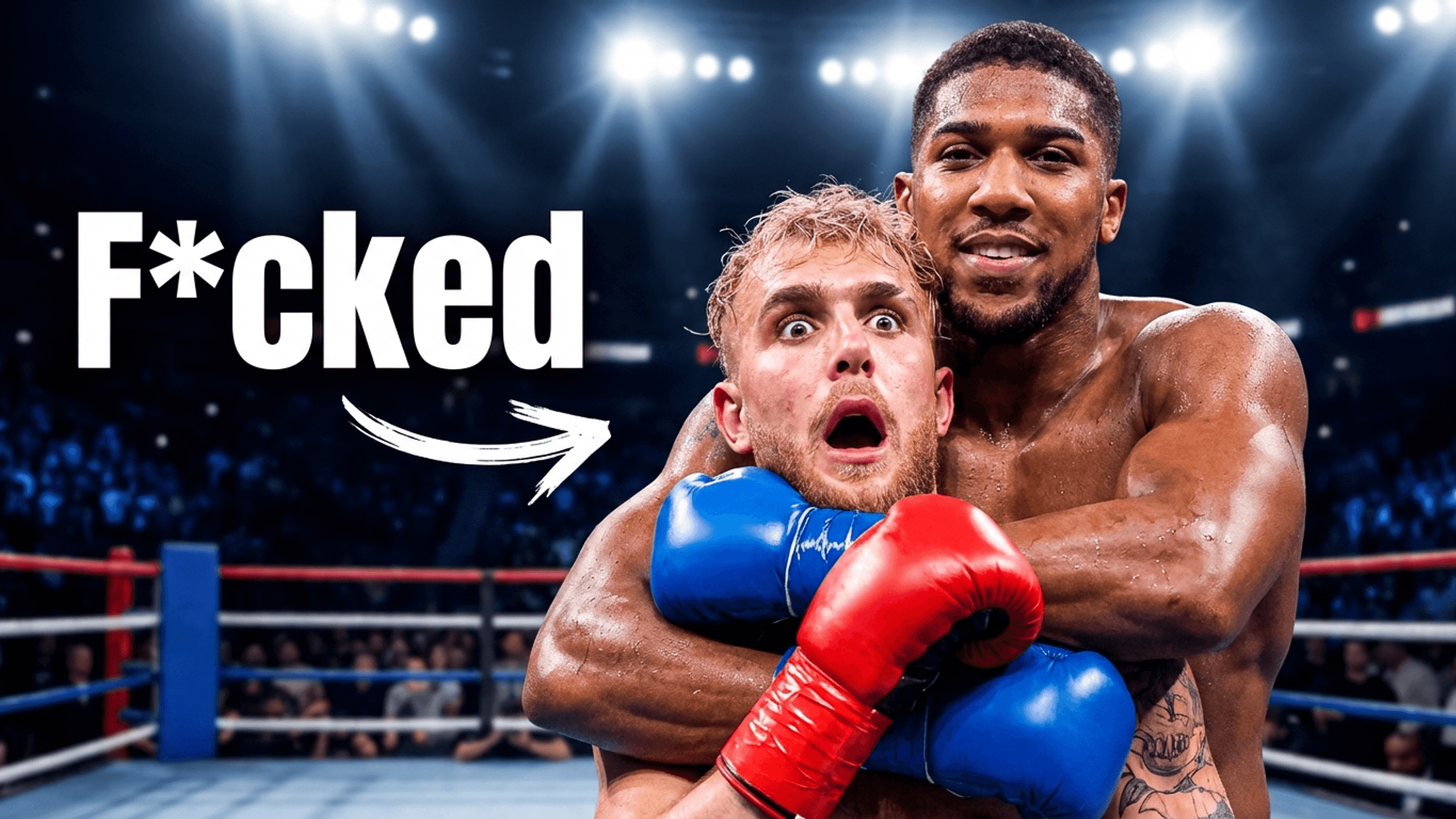

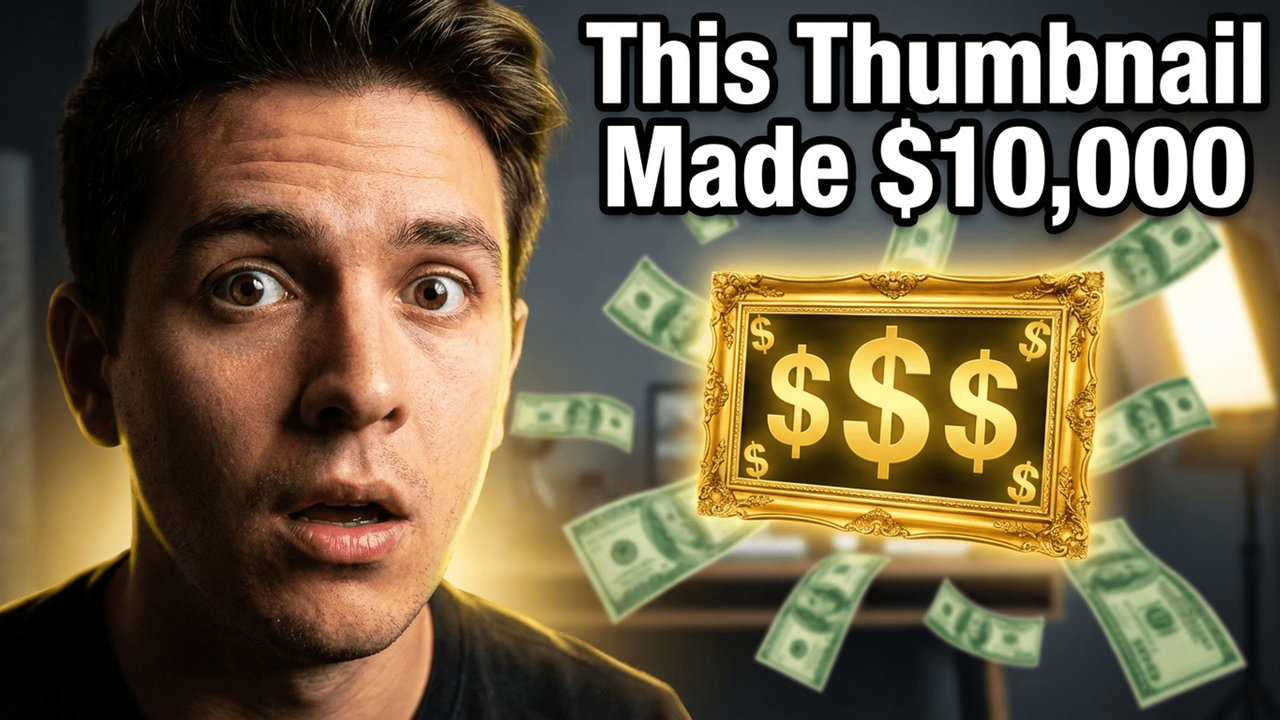
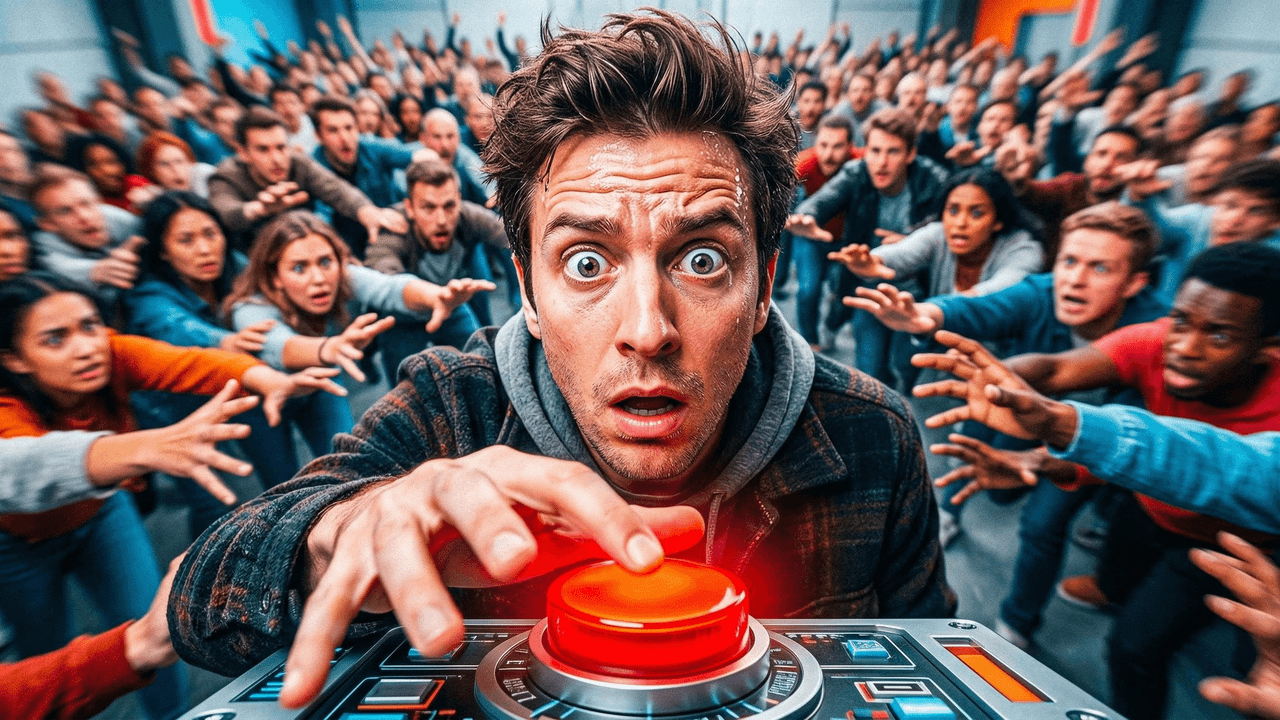
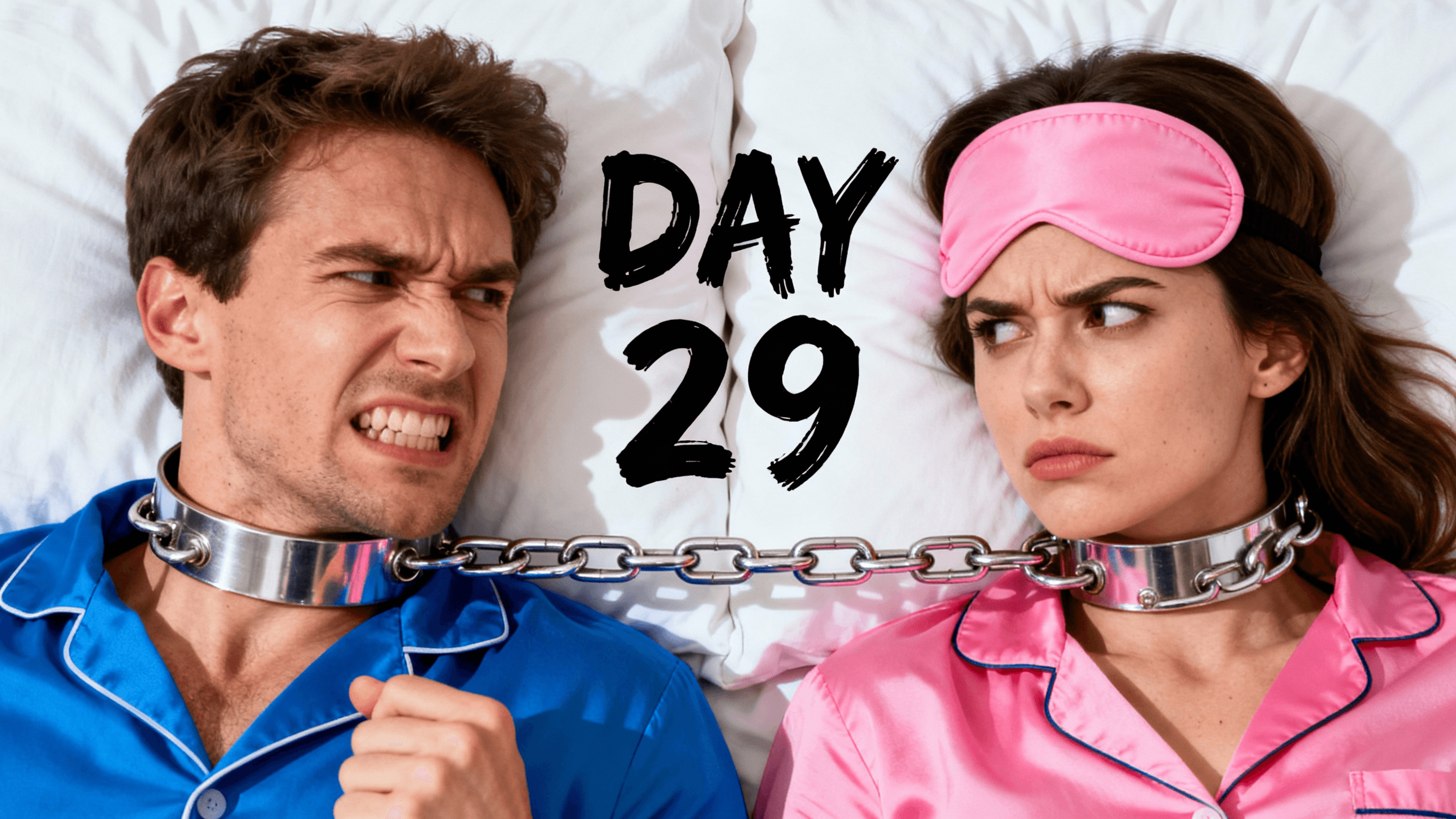


Who It's For
YouTubers who want thumbnails sized perfectly for the platform
Creators who need to make thumbnails quickly between uploads
Beginners who do not want to learn complicated design software
Channels that want consistent professional-looking thumbnails
Benefits
The canvas stays at 16:9 and offers HD, 2K, and 4K export presets, including YouTube's current 3840x2160 recommendation.
Zoom out to see your thumbnail at roughly the size it appears in the YouTube feed. Catch readability issues before you export.
AI handles composition and color balance. You describe what you want and get professional results.
Create thumbnails in minutes instead of hours. Consistent publishing becomes easier.
Try These
“YouTuber sitting at a desk with a big smile, computer screen glowing behind them, ring light reflection in eyes, clean modern room background, excited energy, space for text on the right”
“Hands holding up a phone showing a YouTube play button, confetti falling around it, celebration feeling, bright pink and blue background, milestone achievement moment”
“Person looking at camera with finger on chin thinking pose, question marks floating around their head, curious expression, simple gradient background, wondering what to click”
A YouTube thumbnail maker is built for one job: the clickable image next to your video title. That means a 16:9 canvas, enough source resolution to stay sharp, and text that survives a phone screen. General design tools were built for posters and social posts, not for a small rectangle competing in a feed.
Most creators spend hours on the video and ten minutes on the thumbnail, then wonder why the views are low. Canva and Photoshop hand you a blank canvas; they do not think about CTR, mobile readability, or YouTube's safe zones. A dedicated maker does.
Describe what you want and the AI thumbnail generator builds a starting point, or upload your own photo. Add text, then export in 16:9 at 1280x720 HD, 2K, or 4K. Sign in to make your first one.
A thumbnail helps a potential viewer understand the subject and decide whether the video feels relevant. It works together with the title, topic, audience, and where YouTube shows the impression. No design can guarantee a particular click-through rate.
The most reliable design checks are practical rather than formulaic:
One clear focal point. A viewer should be able to identify the main subject at a small size. Remove supporting elements that compete with it.
Readable contrast. Check the thumbnail against both YouTube light and dark interfaces. The subject and any text should remain distinct from the background.
A title and image that work together. The thumbnail can add visual context instead of repeating every word in the title.
An honest match with the video. Curiosity helps only when the video delivers what the packaging suggests. Misleading packaging may win a click and lose the viewer.
After publishing, use your own analytics and YouTube Studio Test & Compare. Your audience is a better source of evidence than a universal thumbnail formula.
These are the layouts you see on every big channel. They keep getting used because they keep working:
| Layout | How It Works | Best For | Real Example |
|---|---|---|---|
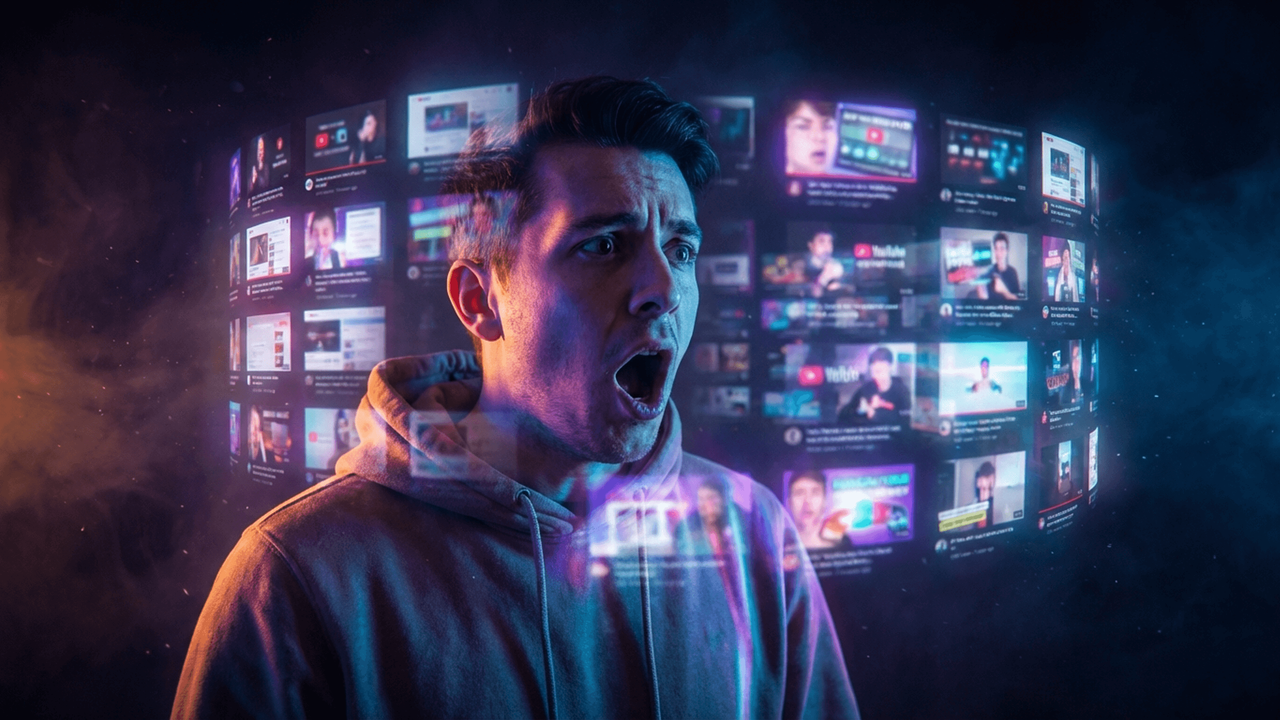
| Reaction Face + Subject | Big emotion on one side, the thing they're reacting to on the other. Viewer sees both and needs to know the story | Challenges, reveals, unboxings, surprises | Shocked face on the left, a stack of cash or a crazy car on the right |
| Before vs After | Split screen. Left side shows the bad version, right side shows the dramatic improvement | Transformations, fitness, makeovers, upgrades | Skinny vs muscular, messy room vs clean room, cheap vs expensive |
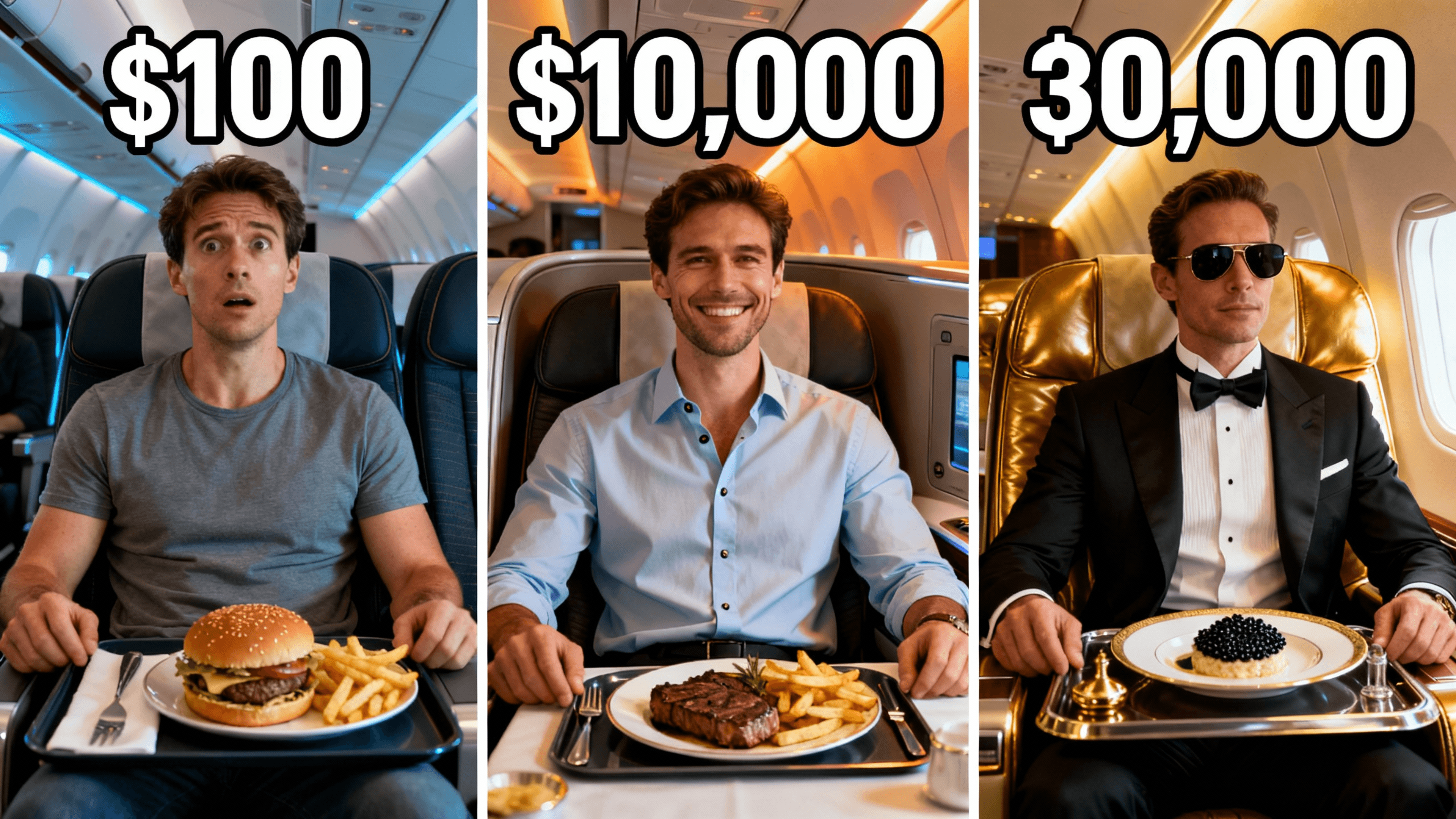
| VS / Comparison | Two things side by side with VS in the middle, each side in contrasting colors | Budget challenges, debates, tier lists, comparisons | $100 flight vs $10,000 flight, both shown clearly |
| Single Cinematic Moment | One powerful scene that captures the peak of the video, wide shot, cinematic framing | Travel, survival, adventure, documentaries | Tiny person on cliff edge at golden hour, swimming with sharks |
| Big Bold Text | The text IS the thumbnail. Oversized, high contrast, 3-4 words max, minimal background | Finance, commentary, opinion, scary facts | "I LOST EVERYTHING" in massive white text on a dark background |
| Person in a Scene | Creator placed in an environment that immediately tells you what the video is about | Vlogs, travel, lifestyle, day-in-the-life | Person inside a private jet, person surrounded by 500 Amazon packages |
Upload the wrong size and YouTube either rejects it or recompresses it until it looks blurry. The specs you need:
1280 x 720 pixels. This is the standard. Don't go smaller. 16:9 aspect ratio. Matches the video player perfectly with no cropping. Check the limit for your upload device. YouTube currently lists a 50MB desktop limit and a 2MB mobile limit for video thumbnails. JPG and PNG are both accepted.
Thumbnail Studioo exports at exactly these specs every single time. You don't have to think about it. Just hit download and upload straight to YouTube.
A few things that trip people up regularly:
Uploading a screenshot from your phone. Phone screenshots are usually square or the wrong ratio and YouTube stretches or crops them until they look awful.
Uploading a Canva design at 1920x1080. That's too big and the file usually ends up over 2MB. YouTube recompresses it and you lose quality.
Putting important content in the corners. YouTube overlays the video duration badge in the bottom right corner. Your face or your text should not be there.
Designing only for desktop. Most people watch YouTube on their phone where thumbnails are tiny. If your text is small or your subject isn't immediately obvious at small size, redesign it.
Your CTR lives in YouTube Studio under the Reach tab on any video. If it's below 2%, your thumbnail is costing you views. A few ways to fix it:
Start with your worst-performing videos. You don't need to reshoot anything. Just make a better thumbnail and swap it out. Plenty of creators have 10x'd their views on old videos by doing exactly this. The video is already indexed and ranked. A better thumbnail gives it new life.
Before you design anything, go look at what's working in your niche. Search your main keyword on YouTube and look at the top 10 results. What do those thumbnails have in common? Big faces? Specific colors? Certain text styles? You're not copying them. You're learning what that audience already responds to, and then making something better.
Test two versions. YouTube Studio lets you A/B test thumbnails. Make two different versions, one safe and one bold, and let YouTube show each to a portion of your audience for a week. The data tells you which one to keep. Most creators never do this. It's one of the easiest wins on the platform.
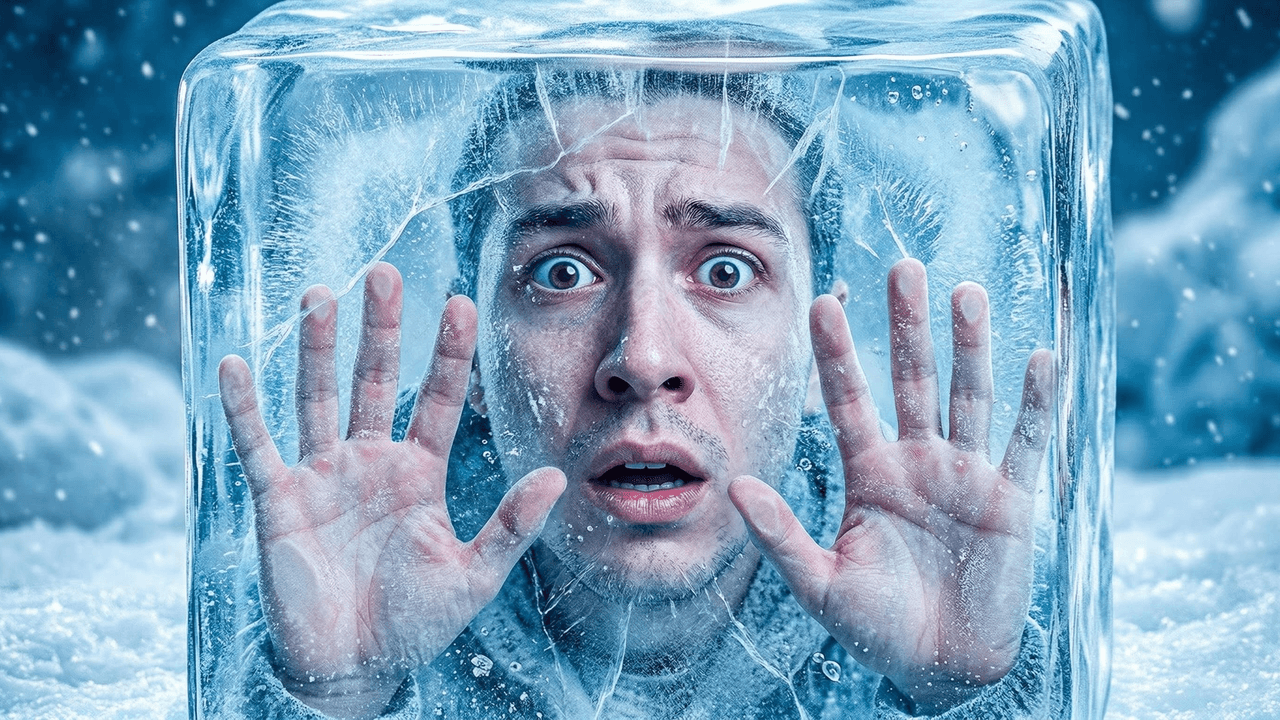
If your face is in the thumbnail, make the emotion bigger. The number one mistake is a small face with a neutral expression. Fill the frame. Show the emotion. Make it impossible to miss at thumbnail size.
Always check it on your phone before uploading. Look at your thumbnail next to 5 competitors on a phone screen. If yours doesn't stand out, something needs to change.
What gets clicks in gaming looks completely different from what works in finance. Here's what actually performs in each niche:
Gaming. The reaction face is everything. Close up, huge expression, RGB lighting in the background. Red and yellow everywhere. Text that sets up stakes like "I almost lost everything" or "100 players hunted me." The viewer should feel the energy before they even click.
Finance and Business. Big numbers stop the scroll. "$0 to $100K" beats any image. Split thumbnails work great here: cheap vs expensive, broke vs wealthy, before vs after. Dark backgrounds with gold or green accents signal immediately that this is money content.
Travel and Adventure. Go wide. Tiny person, massive landscape, golden hour light. The contrast between a small human and a huge beautiful world creates instant awe. Bright warm colors, dramatic weather, real locations always beat stock photos.
Challenge and Entertainment. Lead with the reaction. The more absurd the situation the better the thumbnail. Person surrounded by 500 Amazon packages. Person on the world's most expensive flight. The thumbnail should make the viewer say "wait, what?" and click to find out.
Education and How-To. Keep it clean. One concept, clearly visualized. Before and after works brilliantly here. Ask a question in the text that the viewer genuinely wants answered. Simplicity performs better in this niche than anywhere else.
Fitness and Health. Transformation is the whole game. Side by side, dramatic contrast, real people not stock photos. The after needs to look dramatically different from the before. Add a timeline if you have one. "30 days" or "90 days" tells the viewer exactly what they're signing up for.
Use these as reference points. If your CTR is below the average for your niche, the thumbnail is the first thing to fix.
| Niche | Poor CTR | Average CTR | Strong CTR | What Separates Strong From Average |
|---|---|---|---|---|
| Gaming | Below 3% | 3–6% | Above 6% | Reaction face + stakes text vs plain gameplay screenshot |
| Finance & Business | Below 2% | 2–4% | Above 4% | Big bold numbers and split comparisons vs generic "money" imagery |
| Tutorial / How-To | Below 3% | 3–5% | Above 5% | Clear before/after or a question the viewer genuinely wants answered |
| Travel & Vlog | Below 2% | 2–5% | Above 5% | Cinematic wide shots or a face reacting to something vs a plain travel photo |
| Fitness & Health | Below 2.5% | 2.5–5% | Above 5% | Real transformation with timeline vs generic workout imagery |
| Entertainment / Challenge | Below 4% | 4–7% | Above 7% | Absurd setup with high curiosity vs a normal photo of the creator |
Most creators guess which thumbnail is better. A/B testing removes the guesswork.
How it works. YouTube Studio lets you run thumbnail tests under the Inspiration tab on any video. Upload two different versions and YouTube shows each to a portion of your audience for a set period. The one with the higher CTR wins.
What to test. Change one variable at a time: expression on your face, background color, text copy, or layout. Testing too many things at once makes it impossible to know which change moved the number.
How long to run it. At least 1,000 impressions per variant before drawing conclusions. Videos with low traffic may need a few weeks. High-traffic videos can produce reliable data in 48–72 hours.
When to swap old thumbnails. Check videos older than 3 months that still get impressions but have CTR below 3%. A new thumbnail costs 10 minutes and can revive a video that already has ranking and watch history behind it. Many creators double their views on old content this way.
What a good test result looks like. A 1–2 percentage point CTR difference is meaningful. If version A gets 3% and version B gets 5%, version B will give you roughly 67% more clicks on the same number of impressions.
Best Practices
Design for mobile first. Most YouTube views happen on phones where thumbnails appear small. Use thick fonts and preview at mobile size.
Use a face when the creator or reaction is central to the video. Test face-led and subject-led versions with your own audience.
Use bright, saturated colors. Red, yellow, and electric blue pop against YouTube's interface in both light and dark mode.
Keep text to 3-5 words maximum. Short punchy text communicates instantly at small sizes.
Check your thumbnail against competitors. It needs to stand out when surrounded by other videos in search results.
Common Mistakes
Using YouTube's auto-generated thumbnails. Random video frames rarely look good and don't tell viewers what your video is about.
Copying MrBeast's style without considering your niche. What works for entertainment may not fit educational or cooking content.
Ignoring your CTR data in YouTube Studio. Use analytics to learn what actually works for your audience.
Putting text in corners where YouTube overlays duration badges. Keep important elements away from edges.
Making text too small to read on phones. If it's not readable at thumbnail size, make it bigger.
Design thumbnails at the perfect size for YouTube. No design skills needed. Try free for 3 days.
Make YouTube Thumbnails FreeFree 3-day trial • Cancel anytime
FAQ
You can try Thumbnail Studioo free for 3 days with full access to all tools. All exports are watermark-free during the trial. Start a 3-day free trial.
YouTube currently recommends a 3840x2160 image in a 16:9 aspect ratio. Thumbnail Studioo offers that 4K preset as well as smaller 2K and 1280x720 HD exports. Upload limits differ by device, so confirm the final file size before uploading.
Faces with clear emotions, high-contrast colors, and short punchy text consistently perform well. The key is creating curiosity while accurately representing your video content.
Yes. Describe what you want in plain language and the AI creates custom imagery in about thirty seconds. This is faster than searching stock photos and gives you unique visuals.
Export your thumbnail, then go to YouTube Studio and select your video. Scroll to the thumbnail section and click Upload thumbnail. You need a verified YouTube account to upload custom thumbnails.
Yes. YouTube Studio has a native Test & Compare feature that can compare up to three thumbnails. It chooses results using watch-time share, and a test can take several days or up to two weeks. Create meaningfully different versions, let the test finish, and use the result alongside your retention data.
Three things consistently move CTR: a face showing a strong emotion (shock, excitement, or disbelief), bold text with 4 words or fewer, and colors that contrast against YouTube's white and dark grey interface. The thumbnail does not need to explain the video. It just needs to make someone curious enough to click. Less information, more curiosity.
Yes. Thumbnail Studioo handles everything Photoshop does for thumbnails, without the learning curve or monthly subscription. You get background removal, text overlays, color adjustment, and AI-generated imagery, all in a tool built specifically for YouTube thumbnails. Most creators make their first thumbnail in under 5 minutes.
Go to YouTube Studio, find the video, and check the CTR under the Reach tab. If it is below 2-3%, the thumbnail is the first thing to look at. Try making the face bigger and more expressive, simplifying the text to 3-4 words, or switching to brighter colors. You can swap the thumbnail any time without affecting the video's ranking. Many creators revive old videos with nothing more than a better thumbnail.
The terms are used interchangeably, but there is a subtle difference in practice. A thumbnail maker usually refers to a tool where you build the thumbnail yourself using design elements. A thumbnail generator implies AI creates the image for you from a description. Thumbnail Studioo does both: you can upload and edit your own photos, or describe what you want and let AI generate the background from scratch.
With Thumbnail Studioo, most thumbnails take 2-5 minutes from start to export. Describe the image you want (30 seconds), pick from AI-generated options (30 seconds), add your title text and adjust sizing (1-2 minutes), then export and upload. The bottleneck for most creators is deciding on the concept, not the actual design work.